Rooted in Data: Visualizing India’s Agricultural Story
Indian agriculture has always been a story of complexity and
uncertainty, shaped by shifting weather patterns, rising input costs, and vast
regional differences in productivity. For decades, the data holding the key to
these challenges has been fragmented and difficult to interpret.
That’s where Rubiscape comes in. AI-powered business intelligence platform transforms
over two decades of agricultural records into rich, interactive dashboards. We
turn disconnected numbers into compelling visual stories, enabling researchers,
policymakers, and agri-experts to uncover trends, monitor performance, and make
critical decisions based on real evidence.
Why Visual Analytics Matter in the Field?
Modern farming generates enormous amounts of data-from
rainfall and crop yields to seasonal cycles and land usage. Without the right
tools, this valuable resource remains untapped. Rubiscape cuts through this
complexity by organizing and visualizing data in real-time, making it easy to
extract insights and take timely, effective action.
Unlocking the Story in the Data: Insights from 1997-2020
So, what does Rubiscape reveal about India’s agricultural
journey? Let’s explore the key findings from our analysis spanning 1997 to
2020.
A Snapshot of the 2020 Harvest
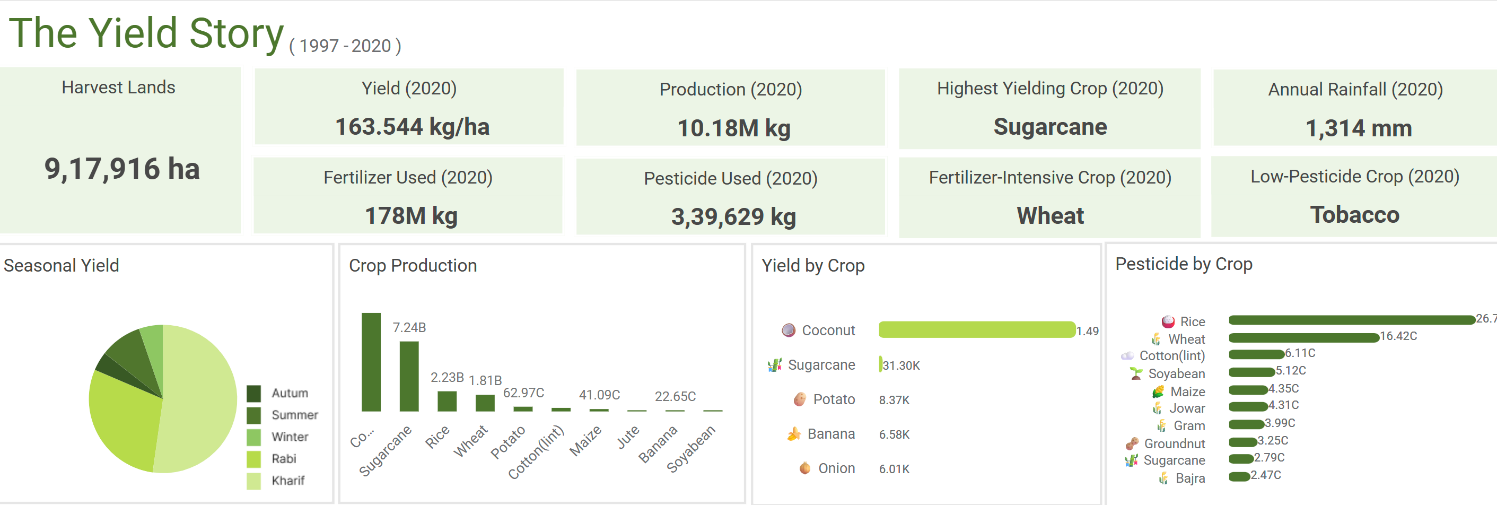
Dashboard provides a high-level overview of India's
agricultural performance for the most recent year in the dataset (2020):
Key Metrics for 2020: The analysis covered 9.17 lakh hectares of harvested land, yielding a total crop production of 10.18 million kg. This was achieved with 178 million kg of fertilizer and 3.39 lakh kg of pesticides.Crop-Specific Highlights:Highest Yield: SugarcaneMost Fertilizer-Intensive: WheatLowest Pesticide Usage: TobaccoSeasonal Performance: The Kharif season was the most productive, with an average yield of 20.43K kg/ha, while the Autumn season was the lowest at 1.62K kg/ha.
The Big Picture: Long-Term Trends (1997-2020)
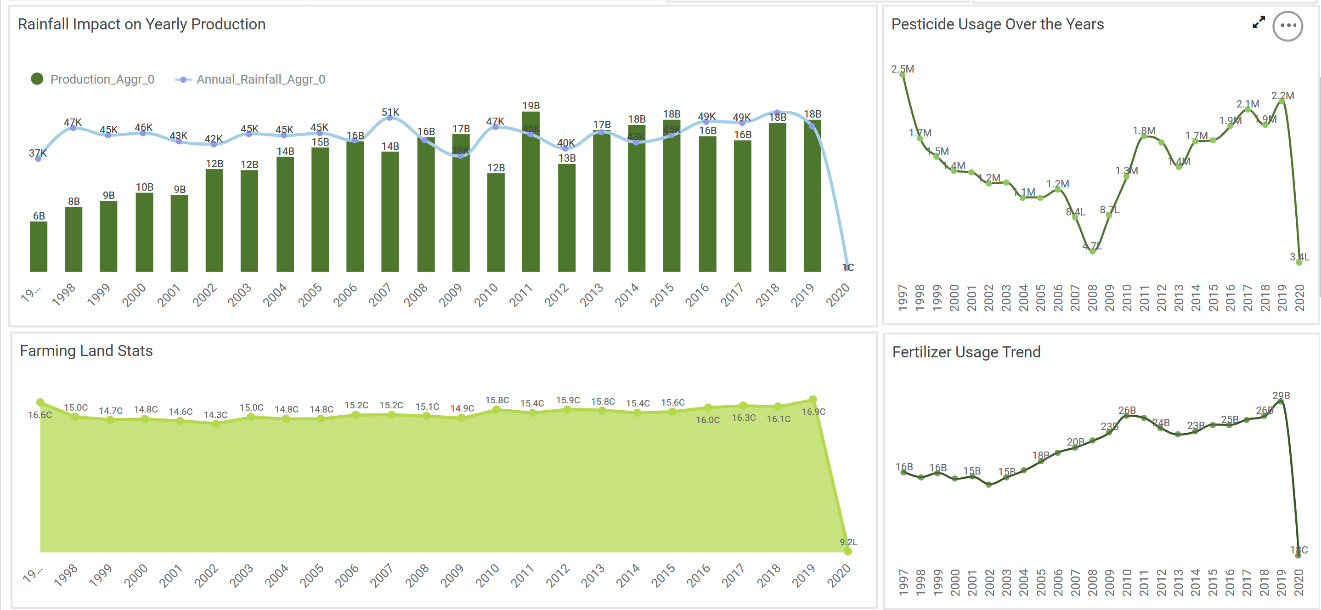
Interactive time-series charts reveal the broader patterns
over 24 years:
Fertilizer
vs. Pesticide Use: Fertilizer application shows a significant and steady
rise, increasing by nearly 80% over the period. In contrast, pesticide use
follows a non-linear trend, declining until 2008 before gradually
rebounding.
Rainfall
and Production Stability: Annual rainfall and crop production have
remained largely stable. The data indicates a period of steady production
growth until 2009, followed by a plateau.
Plateau in Cultivated Land: The total area of cultivated land shows minimal variation, suggesting that agricultural expansion has leveled off. This highlights the critical need to boost productivity on existing land.Overall Top Performers (1997-2020):Highest Overall Yield: Coconut (1.49M kg/ha)Highest Pesticide Consumption: Rice (26.79 cr kg)The 2020 Anomaly: A noticeable dip in fertilizer, production, and cultivated land is visible in 2020, likely reflecting the widespread disruptions caused by the COVID-19 pandemic.
A Map of Productivity: The Geospatial Landscape
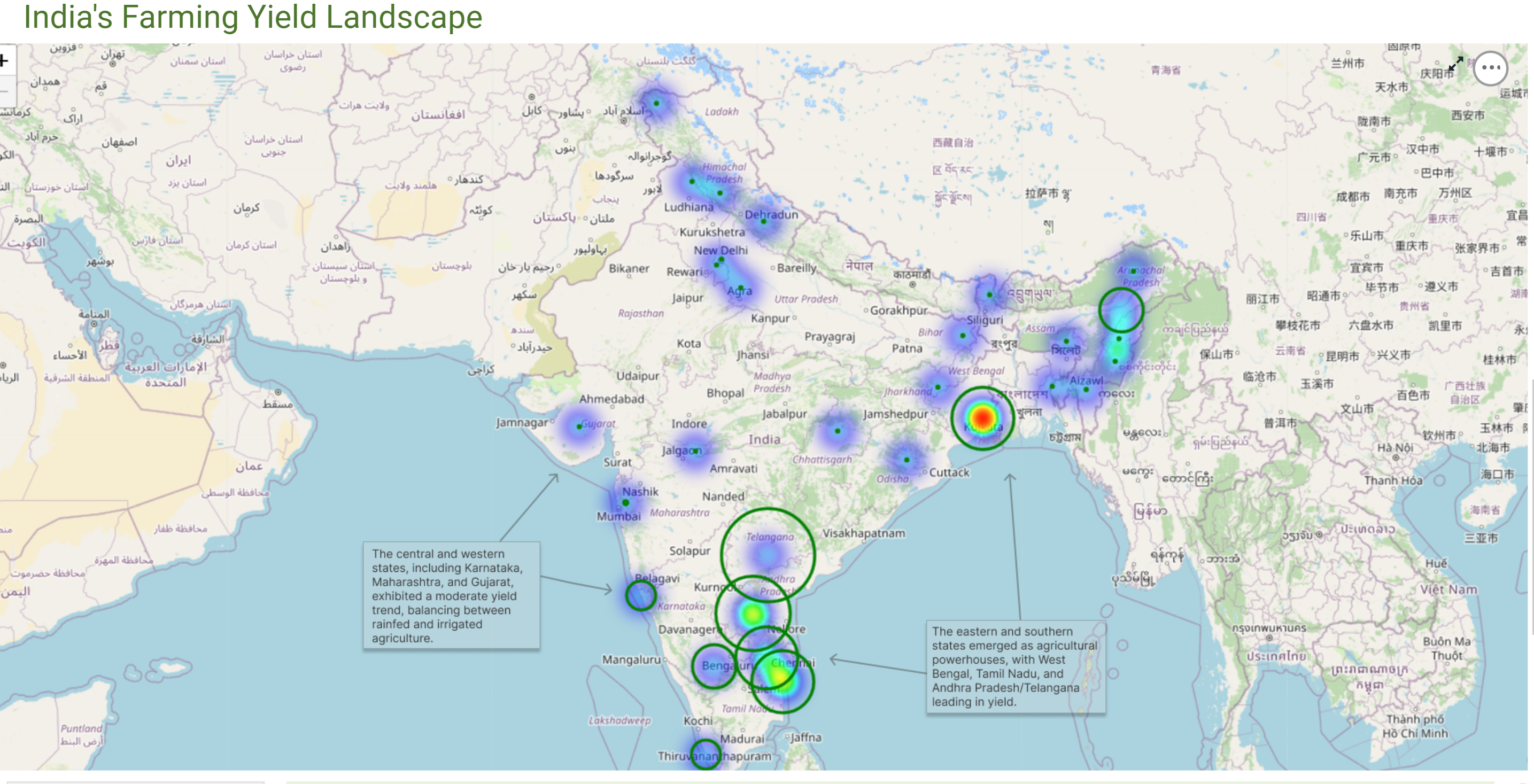
Geospatial heatmap brings regional disparities to life,
color-coding each state by its average crop yield.
High-Yielding States: Eastern and Southern states, including Andhra Pradesh, Tamil Nadu, West Bengal, and Telangana, consistently demonstrate higher agricultural yields.Mid-Range Performers: States like Maharashtra, Gujarat, and Karnataka show moderate yields, reflecting a mix of rain-fed and irrigated farming practices.
Interactive Exploration
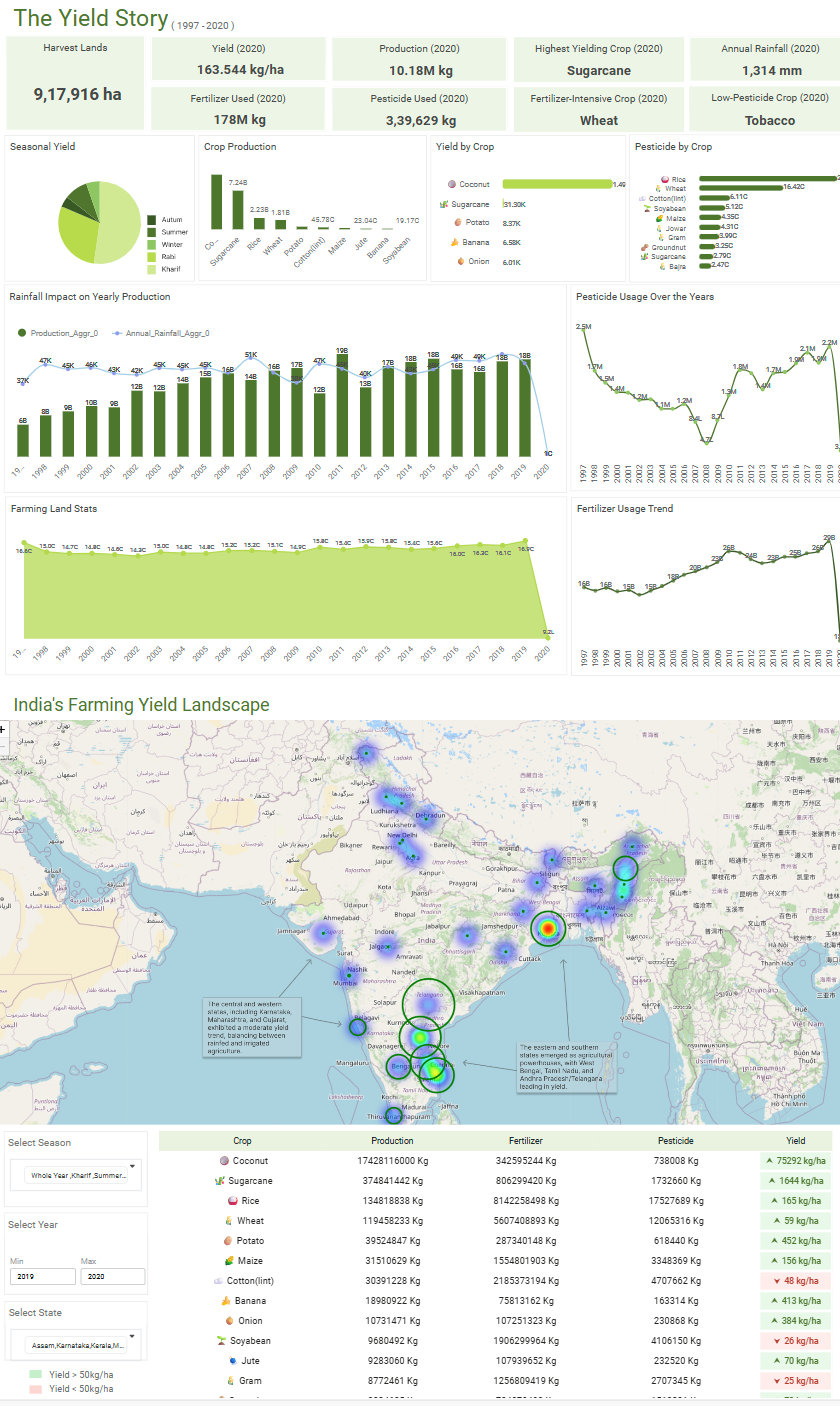
Dashboard puts the power of discovery in your hands. You
can customize the entire data view with precision using interactive filters:
Isolate by Season: Analyze the performance of monsoon-dependent vs. winter crops.Define Your Timeframe: Compare a recent 5-year period against the 20-year average.Drill Down by State: Uncover why one state outperforms its neighbour.
From Data to Decisions
By combining interactive filters across years, seasons,
crops, and states, the Rubiscape platform offers a powerful and intuitive way
to explore over two decades of India’s agricultural data. What was once locked
away in static spreadsheets is now brought to life through dynamic visuals and
AI-generated narratives. We make complex data easy to understand and act on,
driving smarter, evidence-based decisions to shape the future of Indian
agriculture.
Click here to explore the dashboard – you can interact with it, apply filters and see what insights emerge.